

Best Crypto-Native Prediction Markets Beyond Polymarket and Kalshi
 by The Cryptoradar Team
Updated: Jul 24, 2026


Here's something that actually happened during the last bull run: most of the narratives died. Memecoins cooled off. NFTs basically disappeared from the conversation. The "AI plus crypto" pitch mostly turned out to be marketing. But prediction markets didn't fade. They grew, and they kept growing after the hype cycle that introduced most people to them had already passed. That's usually a decent sign a use case is real.
Everyone already knows Polymarket and Kalshi. They're the two biggest players, they get the headlines, and honestly they deserve the attention. But there's a second tier of platforms worth knowing about too. Some are fully on-chain. Some are CeDeFi hybrids. One is brand new and still proving itself. This is a rundown of what's actually out there beyond the duopoly, what each one is good for, and what we'd hold off on.
Polymarket and Kalshi, quickly
Polymarket runs on Polygon, settles in USDC, and uses UMA's Optimistic Oracle to resolve anything that isn't tied to a clean price feed. It's the default for crypto-native users and it basically owns political and geopolitical markets globally.
Kalshi is the regulated version. CFTC oversight, fiat rails, bank settlement. It's pulled ahead on crypto and sports volume lately, while Polymarket still holds the edge on political markets and total open interest.
Both Polymarket and Kalshi are covered plenty elsewhere, so we won't dwell on them. What's more interesting is watching how the rest of the industry has chosen to plug into one or the other.
The best prediction markets beyond Polymarket and Kalshi
Watch this one: Outpoll.com
If any name on this list looks different a year from now, it's Outpoll. It launched globally in June 2026 with a pretty specific thesis: prediction markets have grown up into a real trading category, and most platforms are still shipping the tooling of a casual betting screen instead of an actual exchange.
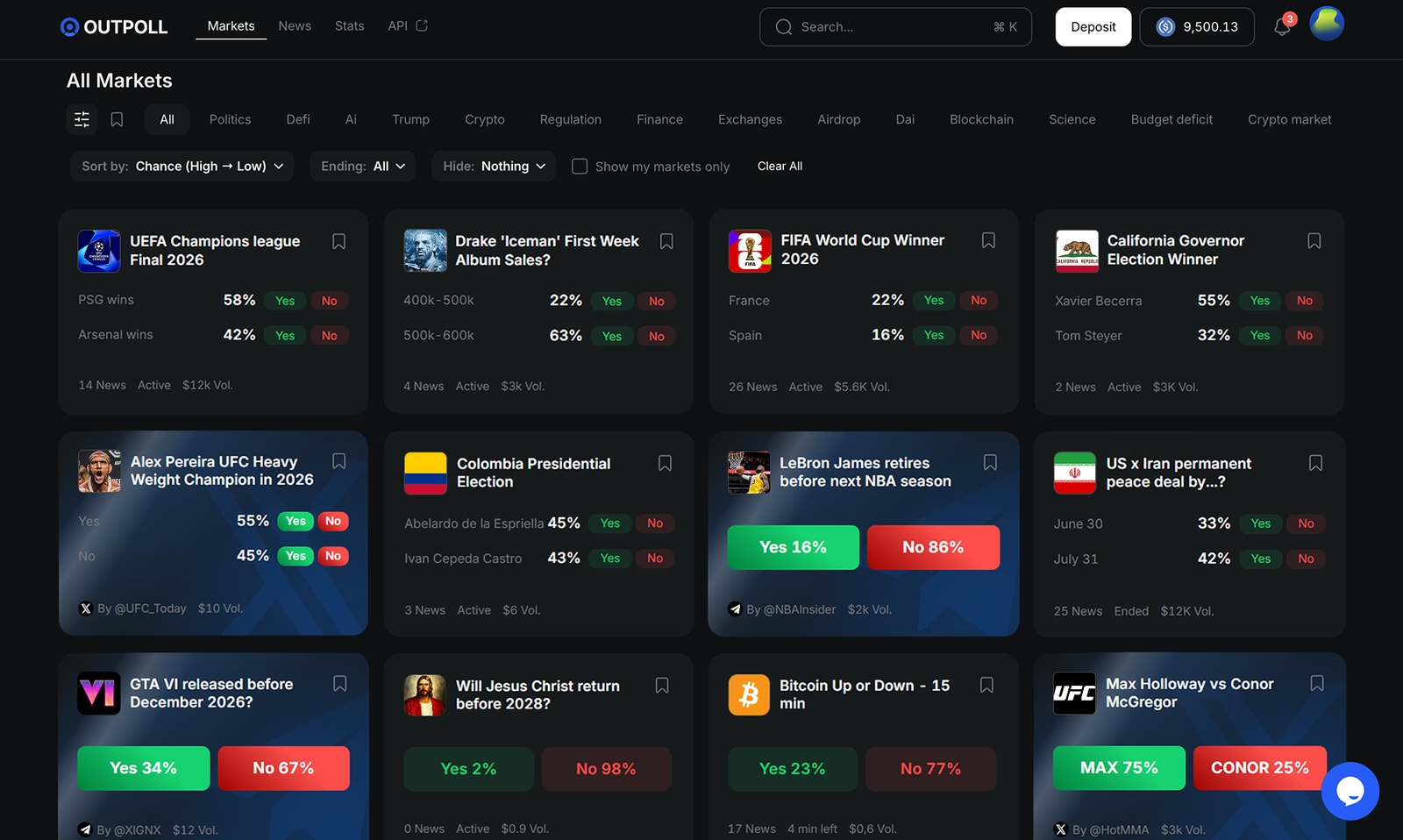
Outpoll's answer to that is take-profit and stop-loss orders on open positions, a full public REST and WebSocket API with documented automation examples, and a creator-led markets program that lets approved community leaders and niche experts launch and curate their own markets. It's built CeDeFi. Markets are fully collateralized and settled in USDC, but matching and KYC run centrally rather than on-chain, which puts it closer to a hybrid model than to Polymarket's fully decentralized stack. It's also mobile-first, with a native Android app live at launch and iOS coming later, plus a news feed built directly into the trading interface.
If the tooling bet works out, and traders really do want stop-loss orders and programmatic access badly enough to switch platforms for them, Outpoll has a real shot at becoming the place serious traders go once they've outgrown a click-and-wait interface. The API-first design in particular could make it a natural home for systematic strategies and arbitrage bots that currently don't have a great option outside Polymarket.
That said, we'd file this under "worth watching" as it excludes the US, UK, EU, and Singapore from its covered regions, which limits its addressable market compared to Polymarket or Kalshi for now. Worth another look in a few months once there's more usage data to check it against.
Limitless (Base)
Limitless is the biggest prediction market on Base, backed by Coinbase Ventures and a handful of other serious funds. Growth has been real: from around $360M in Q1 2026 notional volume to over $1B a month by early 2026. What sets it apart is speed. Hourly and even 30 to 60 minute markets on crypto and stock prices, running on a CLOB rather than an AMM, with Pyth Network handling resolution. It filed for CFTC Designated Contract Market status in May 2026, which signals it wants a regulated path in addition to its on-chain rails. It also has its own token, LMTS, launched October 2025 for staking, governance, and rewards.
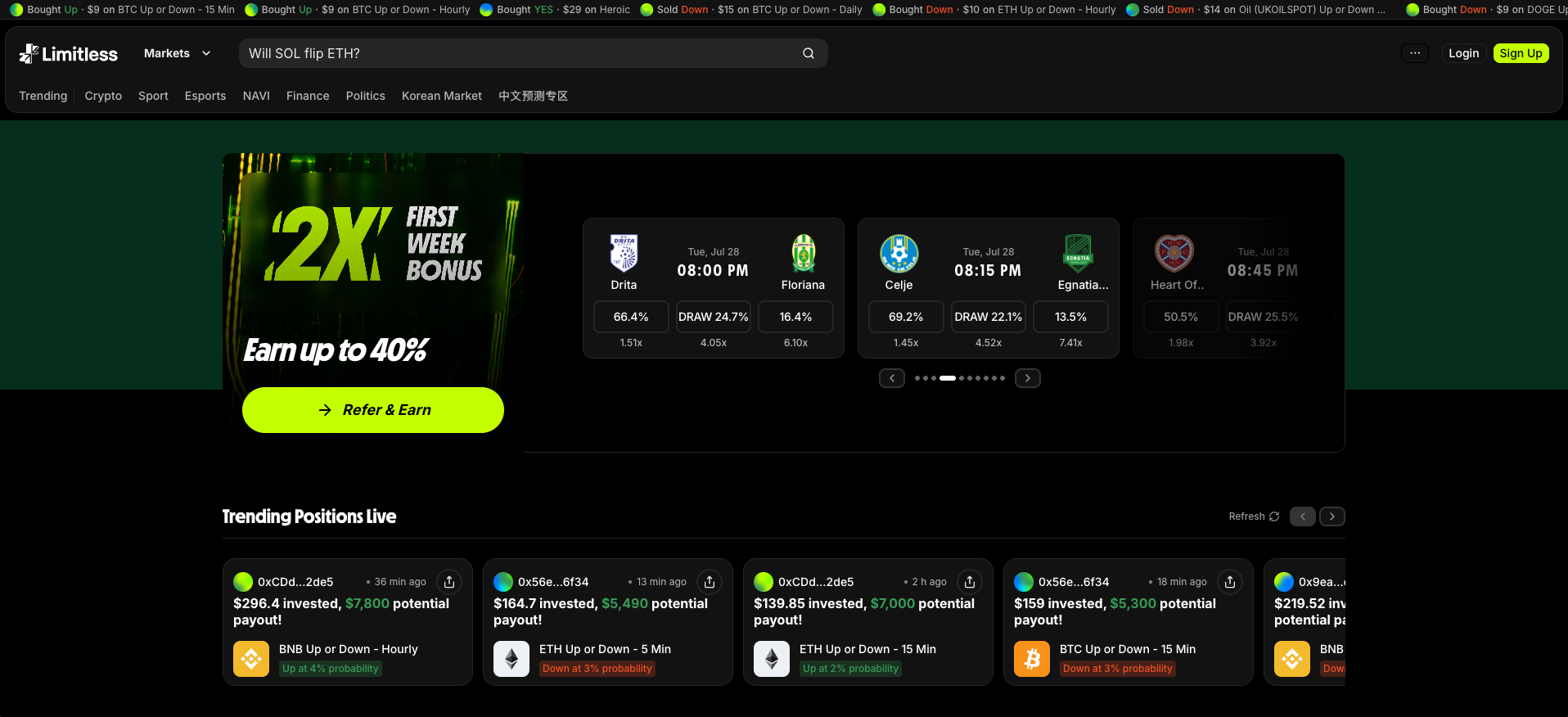
Best for: active traders who want fast, short-duration crypto and stock price markets with an order-book feel instead of the long, event-driven contracts you get on the bigger platforms.
Myriad Markets (BNB)
Built on BNB Chain, Myriad sticks to entertainment, streaming, viral content, and creator-economy questions. Categories a regulated venue like Kalshi generally won't touch. Resolution runs through a Snapshot-style on-chain vote. Volume sits around $100M cumulative, which is small, but that's the tradeoff of staying in a niche instead of chasing Polymarket-scale liquidity.

Best for: anyone who wants markets on pop culture and creator-economy topics that the big regulated platforms simply don't list.
Predict.fun (BNB)
Built on the BNB Chain, Predict.fun keeps capital productive by allowing locked collateral to earn yield while users trade on real-world events. It leans on AI-assisted proposals and decentralized verification rather than relying purely on manual market creation.
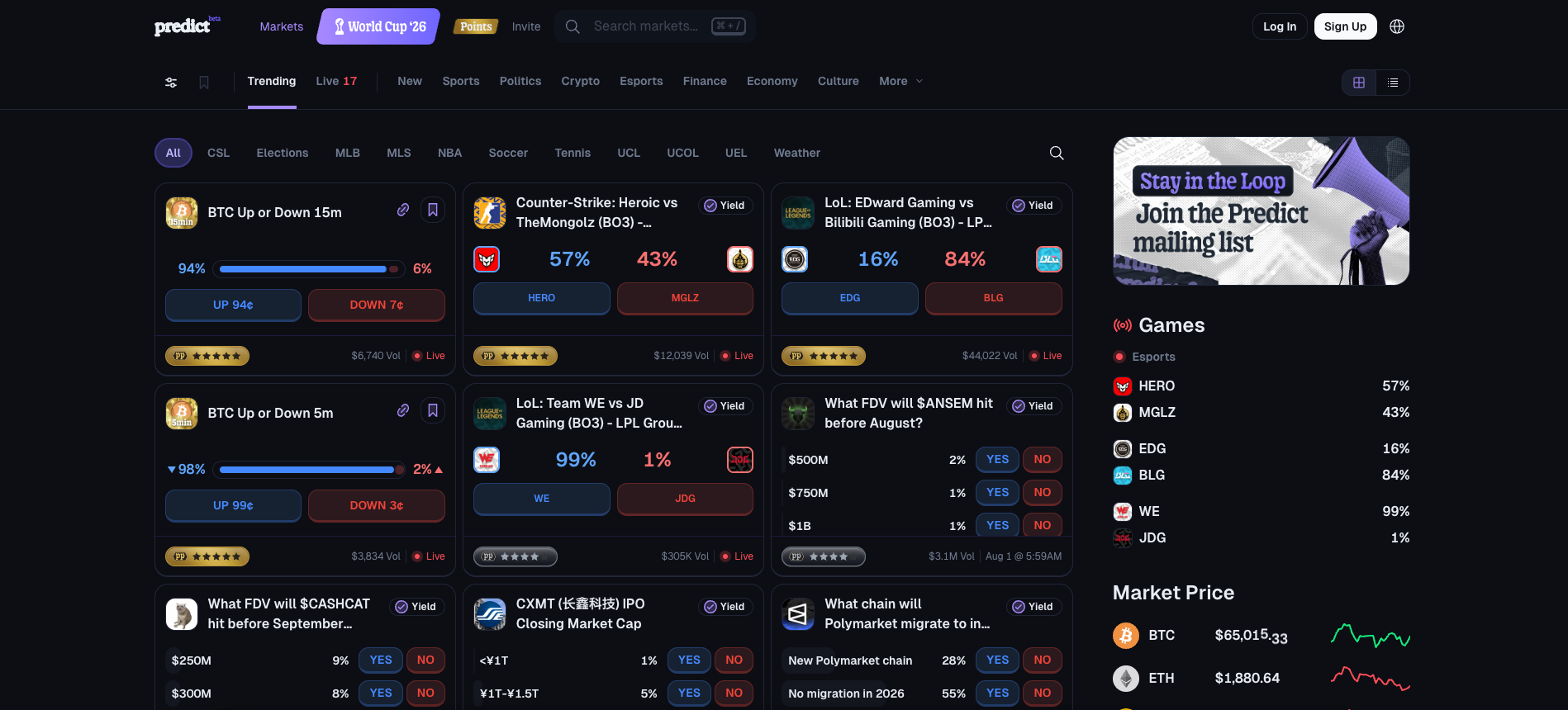
Best for: DeFi users who want their betting capital to earn interest while speculating on crypto, politics, and global events.
Hyperliquid/Outcomes (HYPE)
Hyperliquid shipped prediction markets on mainnet through its HIP-4 standard, settled in USDC with unified cross-margin against its existing spot and perps books. You need staked HYPE to deploy markets permissionlessly. One detail worth noting: HIP-4 was co-authored by an engineer who came from Kalshi, which tells you this isn't a side feature. It's aimed at the duopoly directly.
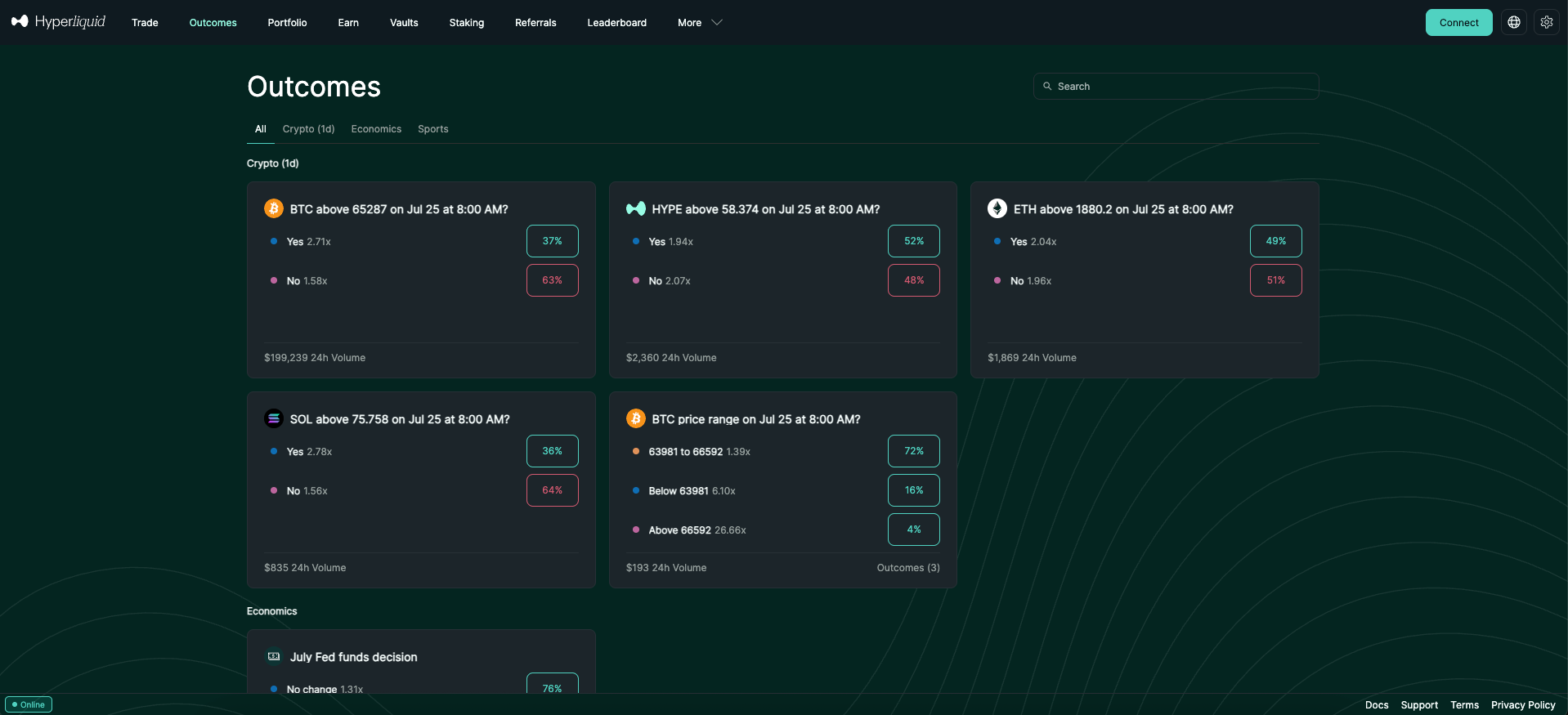
Best for: people already trading on Hyperliquid who want prediction markets in the same margin account as everything else.
PolyBet (Polygon)
PolyBet (polybet.com) is a decentralized prediction market on Polygon. Users bet with USDC on real-world events, and resolution runs through a decentralized process rather than a central operator making the call. The platform has its own native token, PBT, which is meant to incentivize usage and growth.
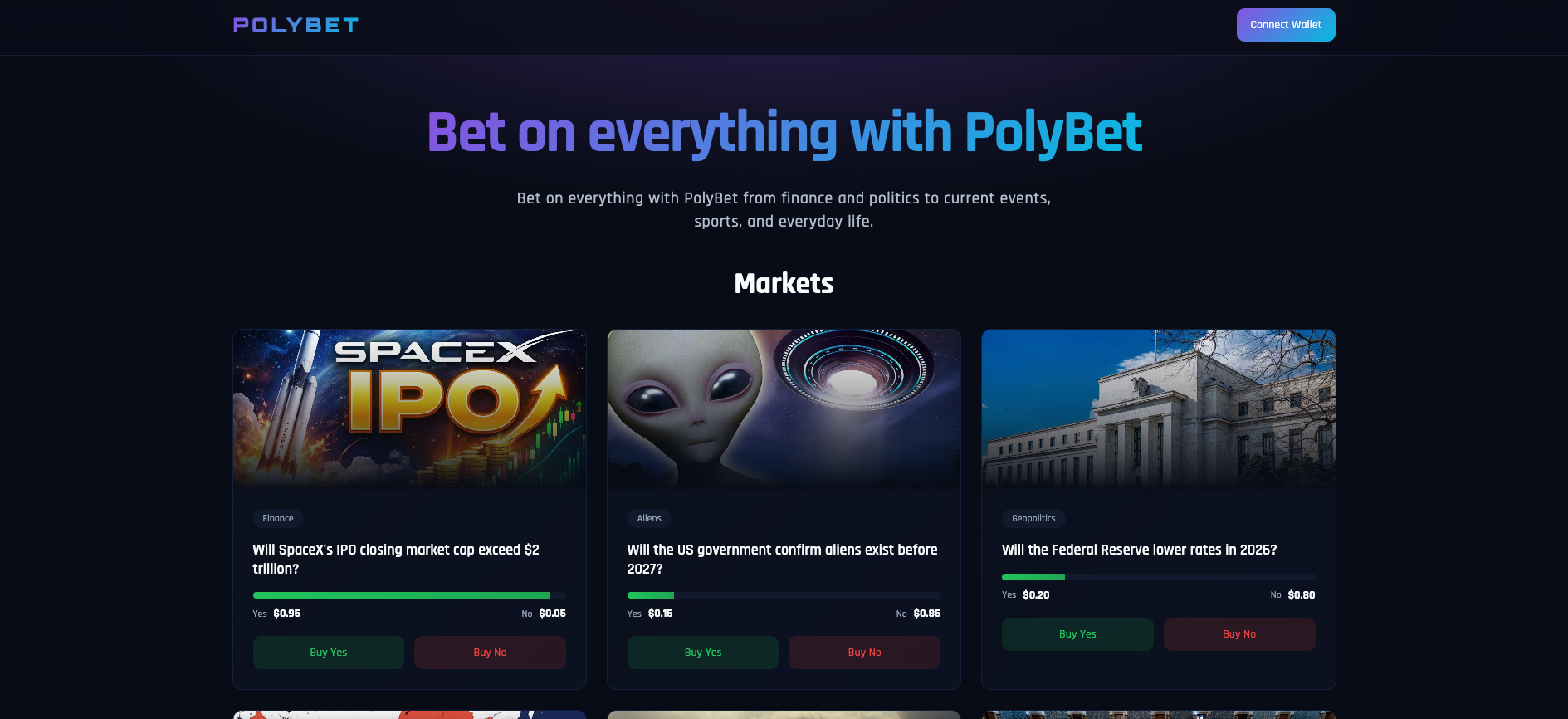
In practice, though, the numbers tell the story here. PBT currently shows low signs of trading volume. That's about as clear a signal as you can get that the platform isn't seeing meaningful active usage right now, whatever the underlying product looks like on paper.
Our recommendation: Hold off. There's a real prediction market mechanism here (USDC collateral, decentralized resolution, Polygon settlement), but there's no evidence of actual liquidity or trading activity to back it up today. Not somewhere we'd point a reader to trade.
Bottom line
Coinbase, Robinhood, Crypto.com and others have all rolled out prediction markets over the past year, and it feels like a wave of independent launches. It isn't. Most of that "new" activity is Kalshi's regulated infrastructure wearing a different logo. Coinbase built its feature directly with Kalshi. Robinhood routes the bulk of its prediction market activity through Kalshi too. Established platforms are betting on Kalshi's rails without most users ever noticing.
Bitpanda is the exception worth naming, and it proves the pattern rather than breaking it: its Vision Wallet became Polymarket's first European partner, plugging directly into Polymarket instead. Same playbook, different rail. Nobody's really building their own regulated exchange from scratch. They're choosing a side.
Polymarket and Kalshi aren't going anywhere, but the rest of the field is genuinely competitive. Hyperliquid and Limitless are both pulling in real volume with different angles, integrated margin trading on one side and high-frequency crypto price markets on the other. Azuro is turning into infrastructure other apps quietly rely on. Myriad and Predict.FUN each serve a niche the big two don't bother with. PolyBet has the right building blocks on paper but zero visible trading activity right now, so we'd leave it alone for the time being. And Outpoll is the one worth checking back on, assuming it can back up its trading-tools pitch with actual usage.